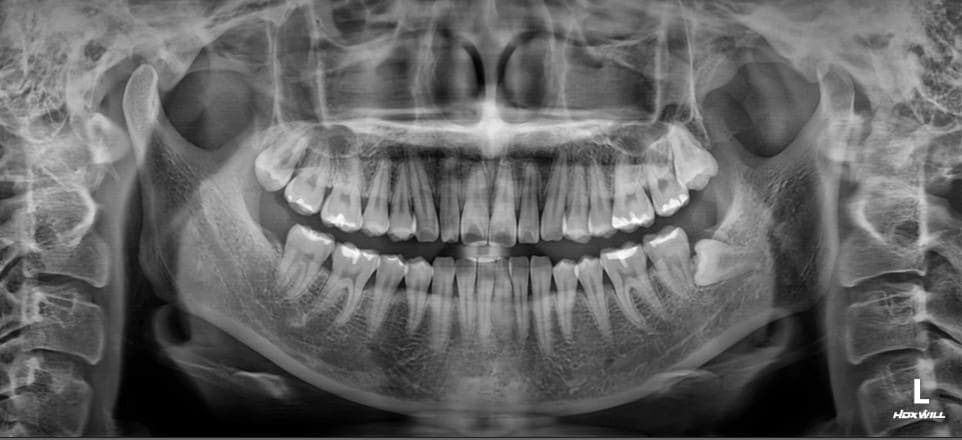
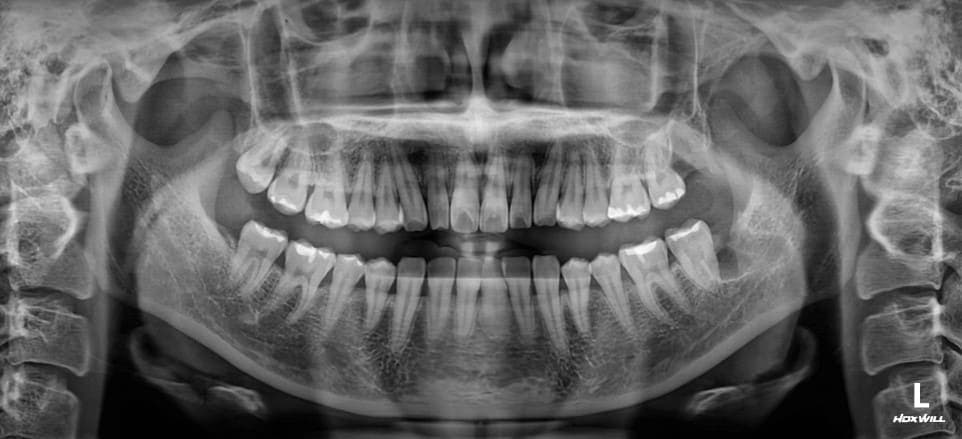
Impacted wisdom tooth extraction
An impacted wisdom tooth was removed after checking it with 3D CT.
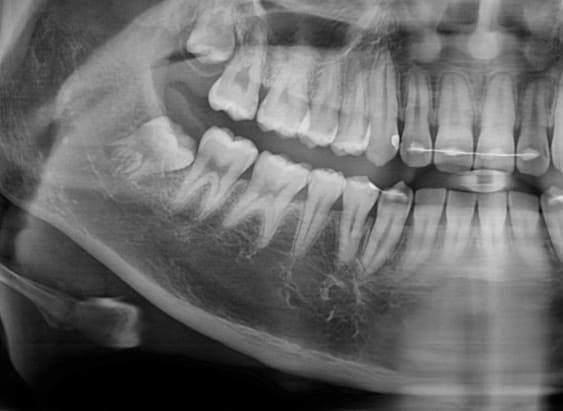
WISDOM TOOTH
Even wisdom teeth lying sideways or buried in gum and bone are removed by our oral & maxillofacial surgeon himself — after checking the position of the nerve with 3D CT.
Surgeon · Dr. Park Dong-Uk (Director, Oral & Maxillofacial Surgery Specialist)
Extraction by an
oral surgeon
3D CT
nerve check
Conscious
sedation
WHY SEOUL KWON
Removing a wisdom tooth is minor surgery close to bone and nerves. How the tooth lies, and how close it is to the nerve, determine the method.
01Extraction by an oral & maxillofacial surgeon
Our director personally removes impacted and horizontal wisdom teeth of the difficulty usually referred to university oral surgery departments.
02Nerve canal checked with 3D CT
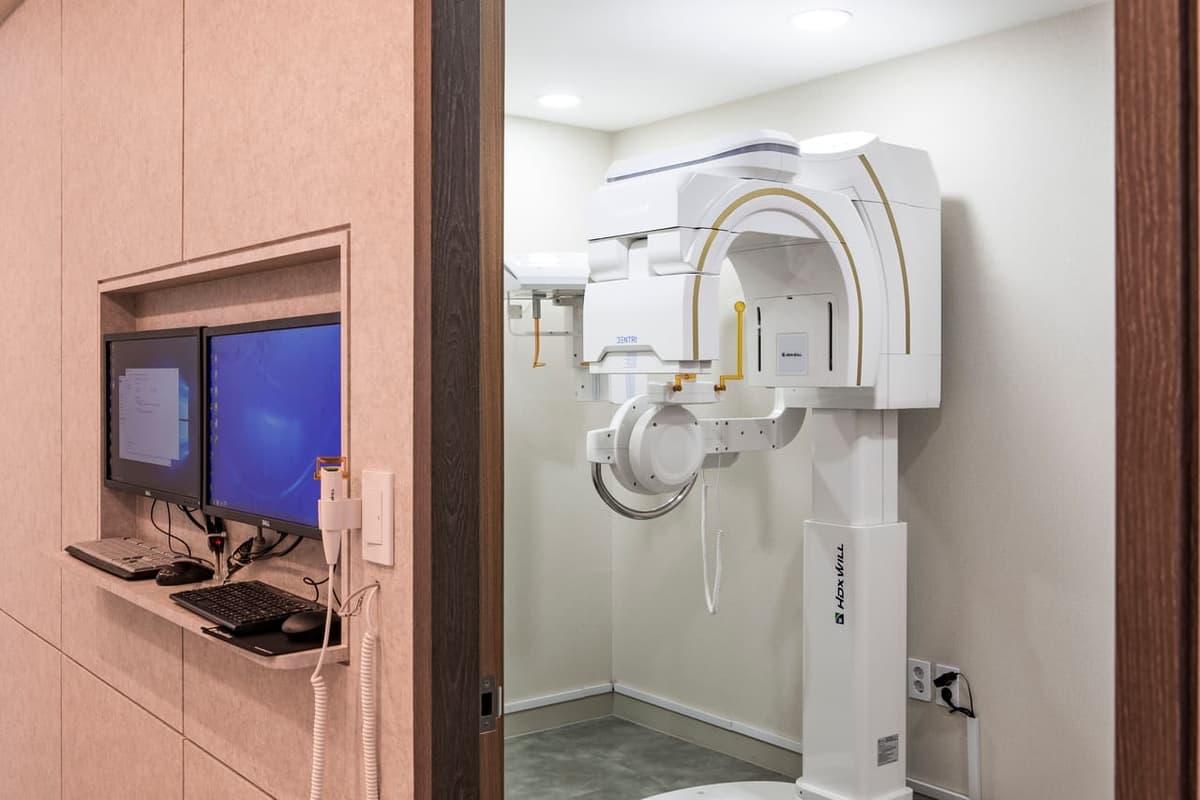
A sensory nerve runs close to the roots of lower wisdom teeth. Distances that overlap on ordinary X-rays are confirmed with 3D CT before we plan the direction of removal.
03Extraction under sedation
If you are afraid of the dentist or need several teeth removed at once, extraction can be done comfortably under conscious sedation.
04Partner of Seoul National University Dental Hospital
If university-hospital care is needed — for example because of a medical condition — we refer you promptly.
IMPACTION TYPES
The direction and depth of wisdom teeth differ from person to person. The gold outline is the wisdom tooth; the dotted line shows the lower jaw nerve canal.
VERTICAL
Fully erupted
A wisdom tooth that has come in straight. Removal is relatively simple, but if it is hard to brush and keeps getting decay or gum inflammation, we recommend removing it.
PARTIAL
Partially impacted
Only part of the tooth has come through the gum. Food gets trapped under the gum flap, often causing painful swelling (pericoronitis).
MESIOANGULAR
Angled impaction
Buried at an angle toward the molar in front. It often causes decay or bone loss on the back of that molar.
HORIZONTAL
Horizontal impaction
Lying completely on its side. It needs to be sectioned and removed in pieces, and the roots are often close to the nerve.
BONY IMPACTION
Fully bony impaction
Buried deep in the bone. We check for cysts and effects on neighboring teeth with CT before deciding whether and how to remove it.
Not every wisdom tooth has to come out. If it has grown in straight and is well cared for, it can be monitored at regular check-ups.
3D CT
A standard panoramic X-ray is a flat image where structures overlap, so it is hard to tell how far the roots really are from the nerve. For impacted wisdom teeth, we plan extraction after checking with 3D CT.
Sectioning to remove less bone
Taking out a sideways wisdom tooth in one piece means removing a lot of surrounding bone. Dividing the tooth into a few pieces and removing them in turn reduces bone damage and swelling. When the roots are very close to the nerve, we also consider other approaches that lower the risk.
PROCESS
Whether to remove several teeth at once or over separate visits is decided together, based on the teeth and your schedule.
STEP 01
We check the direction and depth of the tooth and its distance from the nerve, and explain the method and expected recovery.
STEP 02
We begin only after confirming the area is fully numb. If you prefer, it can be done under conscious sedation.
STEP 03
If needed, the tooth is sectioned to reduce bone damage, and any inflamed tissue is cleaned away.
STEP 04
The site is stitched and bleeding is checked, then we explain your prescription and aftercare.
STEP 05
About a week later, we remove the stitches and check healing.
AFTERCARE
How much swelling and pain you have depends on the position of the tooth and how it was removed. Below is a typical recovery.
Right after
Same day
Days 2–3
About 1 week
Contact us right away if…
bleeding does not stop even with gauze, pain gets worse rather than better after 3–4 days, or you develop a fever or cannot open your mouth well. Please do not wait — call us at +82-2-6952-2788.
CASES
An impacted wisdom tooth was removed after checking it with 3D CT.
These are before/after photos of the same patient, same teeth, treated by the same medical staff, posted with the patient's consent. Results vary by individual; all treatments may involve side effects such as infection or bleeding — please consult the medical staff.
SURGEON

DIRECTOR · ADJUNCT PROFESSOR
Oral & Maxillofacial Surgery Specialist · Integrated Dentistry Specialist
“The depth of a Seoul National University–trained specialist, with the warmth of caring for family.”
FAQ
We answer every last question, carefully and in full.
Yes. Our director is an oral & maxillofacial surgery specialist who personally removes impacted and horizontal wisdom teeth of the difficulty level usually referred to university hospitals. We check the distance to the nerve canal with 3D CT before proceeding safely.
LOCATION
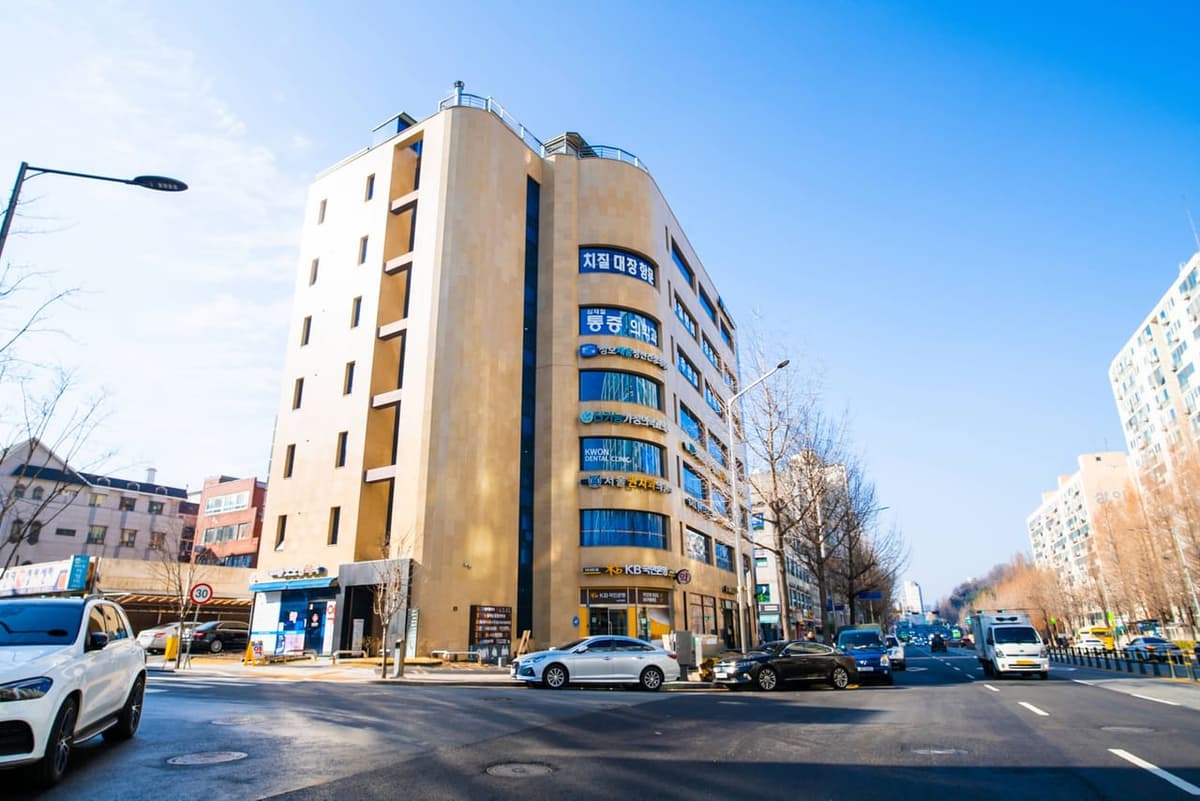
Open on public holidays, too
| Mon · Thu (late hours) | 09:30 – 21:00 |
|---|---|
| Tue · Wed · Fri | 09:30 – 18:30 |
| Sat · Public holidays | 09:30 – 14:00 |
| Lunch break (weekdays) | 13:00 – 14:00 |
| Sunday | Closed |
Open until 9 p.m. on Mondays and Thursdays, and until 2 p.m. on Saturdays and public holidays. Closed on Sundays.
KEEP WHAT'S ORIGINAL & NATURAL
Just leave your symptoms and contact details —
the dentist in charge will review them and get back to you.