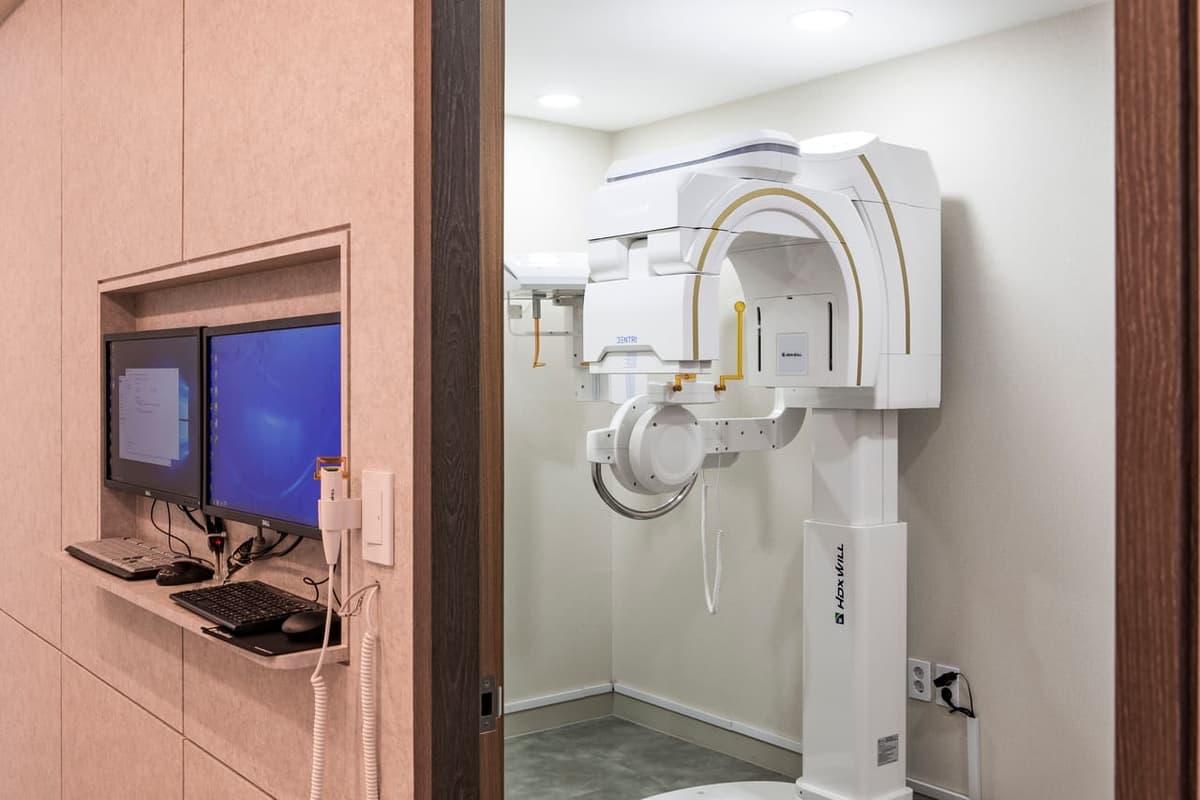
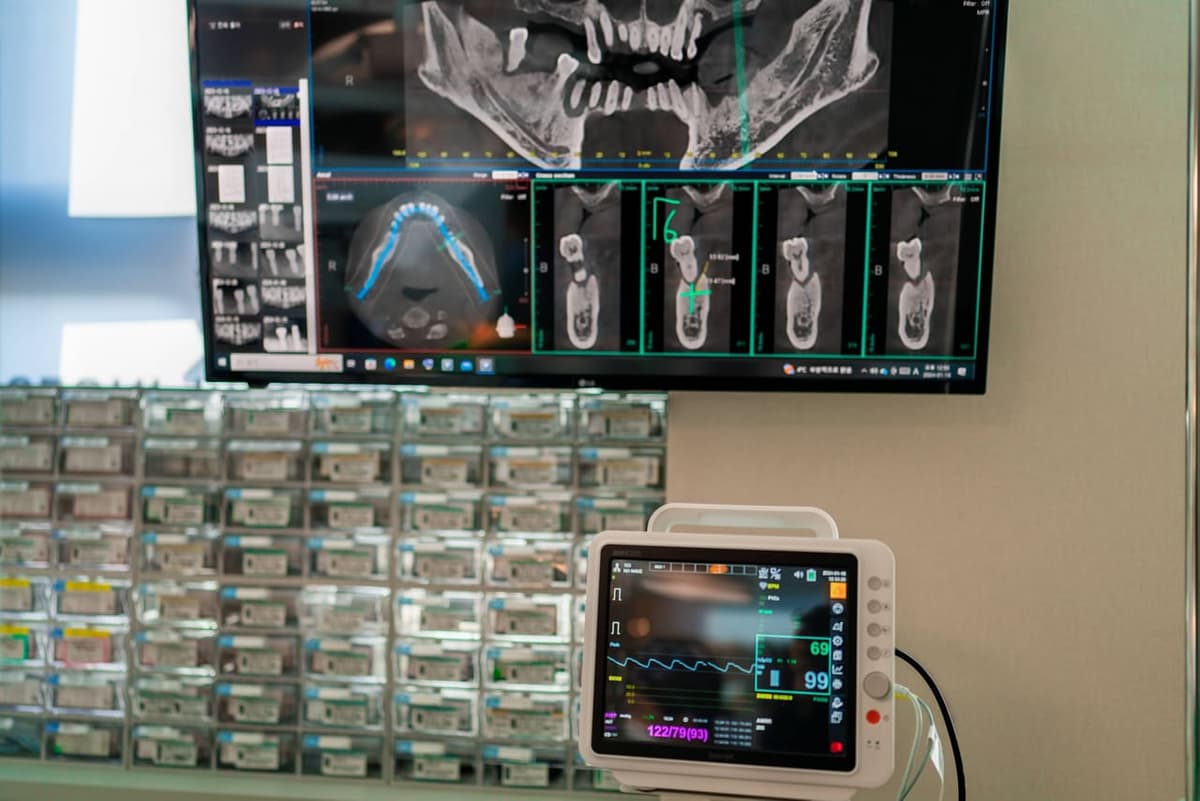
 01 · 3D CT
Precise 3D diagnosis
We see the jawbone, teeth, surrounding bone and nerves in three dimensions to build a thorough treatment plan.
IMPLANT & FULL-ARCH
From a single implant to full upper and lower arches. A surgeon who works with bone, nerves and the sinus takes responsibility from diagnosis to placement.
Surgeon · Dr. Park Dong-Uk (Director, Oral & Maxillofacial Surgery Specialist)
Surgery by an
oral surgeon
All-on-4 · 6
full-arch
Our own
in-house lab
FULL-ARCH IMPLANT
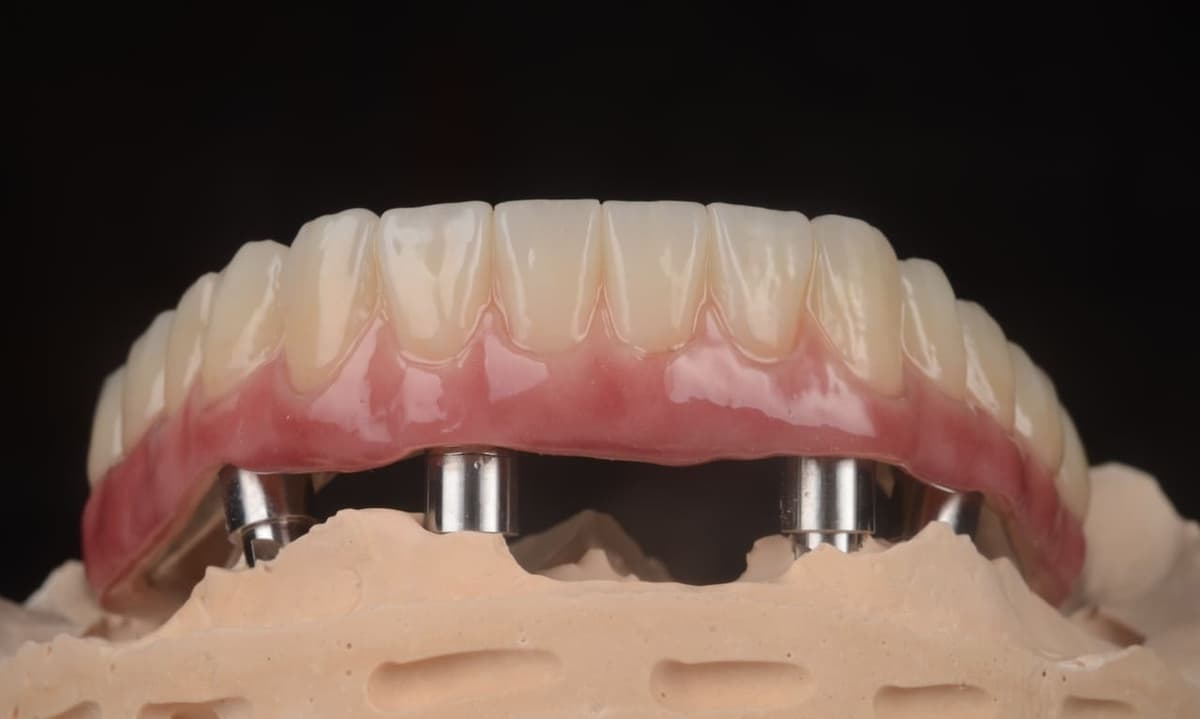
Full-arch implants are for people who have lost most or all of their teeth: several implants are placed, and a complete set of teeth for the whole arch is fixed on top. Unlike removable dentures, they stay in place like your own teeth, so eating and speaking feel natural again.
ALL-ON-4
All-on-4 fixes a complete arch of teeth (upper or lower) on four implants. The front implants go in straight, and the back implants are tilted about 30 degrees to make the most of the remaining bone. That is why people who have been told they lack the bone for implants, or whose bone has shrunk after years of dentures, may still be candidates.
Even with little bone
Implants go where bone remains, so people told they lack bone can still be considered.
Firmer than dentures
Fixed to implants, the teeth do not slip or lift, giving better stability and chewing power than dentures.
Often no sinus graft
Tilting the back implants often avoids the need for a sinus bone graft.
Fewer implants
Four implants support a whole arch, reducing the extent and burden of surgery.
ALL-ON-4 · 6
More implants mean more support — but the right answer depends on the amount and quality of your bone, the size of your arch and your general health. We decide together with you after checking with 3D CT.
4
implants
ALL-ON-4
The minimum number of implants, placed where the bone is best. Mainly considered when the jawbone has shrunk a lot or surgery needs to be kept light.
6
implants
ALL-ON-6
More implants share the chewing load. Considered for the softer bone of the upper jaw or when extra support is needed.
With full-arch implants, how far the teeth extend matters as much as how many implants are placed. We plan one of two approaches based on your remaining bone and how you chew.
SHORT ARCH
Restoring up to the premolars
The bridge is planned to end at the premolars. Fewer implants and less surgery still restore the chewing function needed for everyday meals — considered for older patients or when a medical condition calls for lighter surgery.
LONG ARCH
Restoring up to the molars
The bridge extends to the molars. For people with enough bone and a strong bite, additional implants provide stable support over a wider span.
WHY SEOUL KWON
An implant is surgery inside the bone. The same implant can last very different lengths of time depending on who places it, and with what plan.
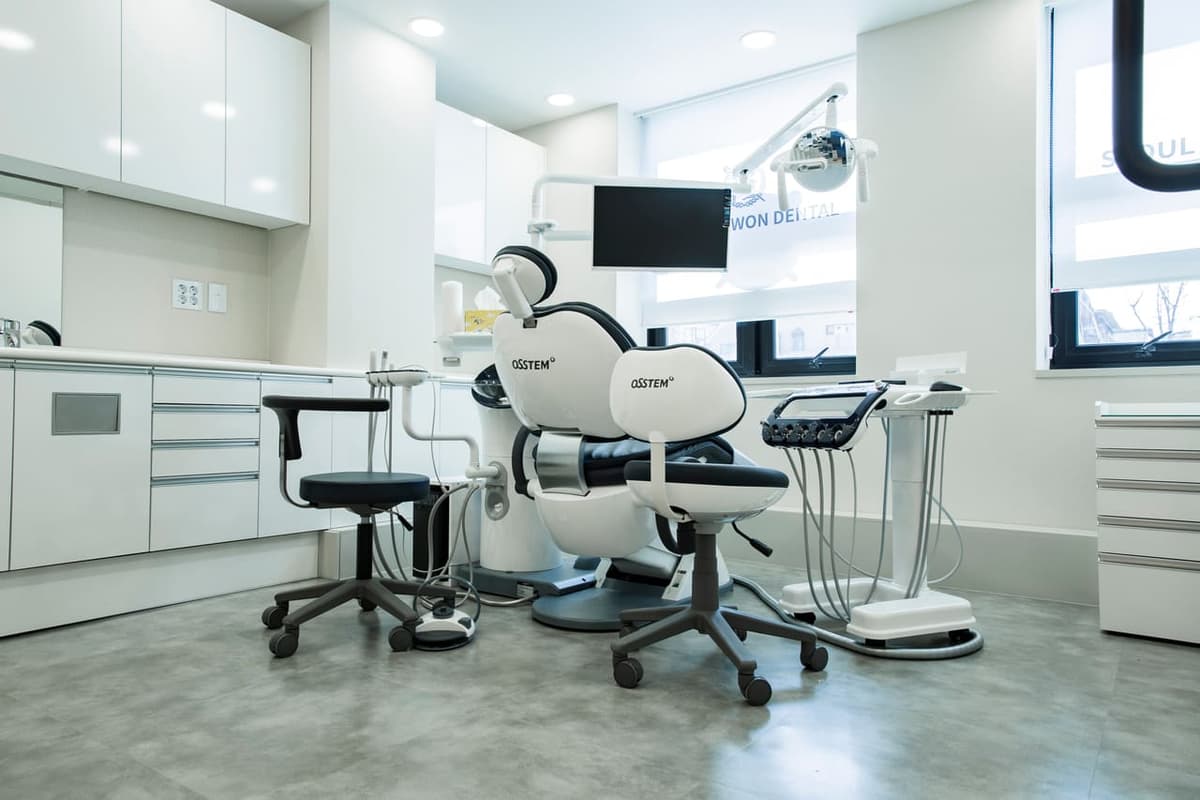
Our director trained in oral & maxillofacial surgery at SNU Boramae Medical Center, where he now serves as an adjunct professor. A surgeon who works with bone, nerves and the sinus handles everything from diagnosis to placement himself.
We check the height and width of the jawbone and the position of the nerve canal and sinus in 3D, then plan the position, angle and depth of each implant.
Dentists and technicians design and make the restoration in the same space. If anything needs adjusting, it is changed on the spot.
For strong dental anxiety or long procedures, treatment can be carried out under conscious sedation with a 3-way safety protocol.
If university-hospital care is needed — for example because of a medical condition — we refer you promptly.
ADVANCED IMPLANT
When bone is lacking, or an existing implant has run into problems, surgical judgment and experience shape the result.
REVISION
Revision surgery removes an implant that has failed for one reason or another and places a new one. There is more to consider than in a first surgery, so the dentist’s clinical experience matters especially.
Common reasons revision is needed
01Peri-implantitis
Implants lack the periodontal ligament of natural teeth, so they are more vulnerable to inflammation. Without good care the surrounding bone can break down quickly, and the implant may need to be removed and replaced.
02Failed osseointegration
If rejection occurs early after placement, or the implant moves because you chew on the surgical site, it cannot fuse firmly with the bone.
03Fractured components
Hard or chewy foods, clenching, resting your chin on your hand or sleeping face-down can concentrate force on one side and break parts such as the screw or abutment.
The revision process
STEP 01
After checking the remaining bone and surrounding structures with 3D CT, we remove the old implant while minimizing damage to the bone.
STEP 02
Infected tissue is cleaned away, and bone grafting fills the damaged area if needed.
STEP 03
Once the bone and gums have recovered, a new implant is placed.
STEP 04
A restoration made in our in-house lab is attached and the bite is carefully adjusted.
SINUS LIFT
Sinus lift
Above the upper back teeth lies an air space called the maxillary sinus. When bone height there is insufficient, the sinus membrane is gently lifted and the space beneath it filled with graft material to create room for the implant.
BONE GRAFT
Bone graft
Over time after tooth loss, the jawbone becomes thinner and lower. Bone grafting rebuilds the missing width and height to give the implant a foundation that lasts.
IMMEDIATE LOADING
Immediate loading
When bone quality and initial stability are sufficient, a temporary tooth is attached right after placement to shorten the time without teeth. It is not possible in every case — we decide after checking CT and stability during surgery.
ANTERIOR IMPLANT
Front-tooth implants
Front teeth are the first thing people see when you smile. We position the implant with the gum line, bone thickness and the color and shape of neighboring teeth in mind, and our in-house lab makes a restoration matched to your teeth.
ONE-STEP
One-step implants
When conditions allow, the implant is placed at the same time as the extraction, reducing the number of surgeries and the overall treatment time. We decide after checking the degree of inflammation and the remaining bone.
DIGITAL DIAGNOSIS
01 · 3D CTWe see the jawbone, teeth, surrounding bone and nerves in three dimensions to build a thorough treatment plan.
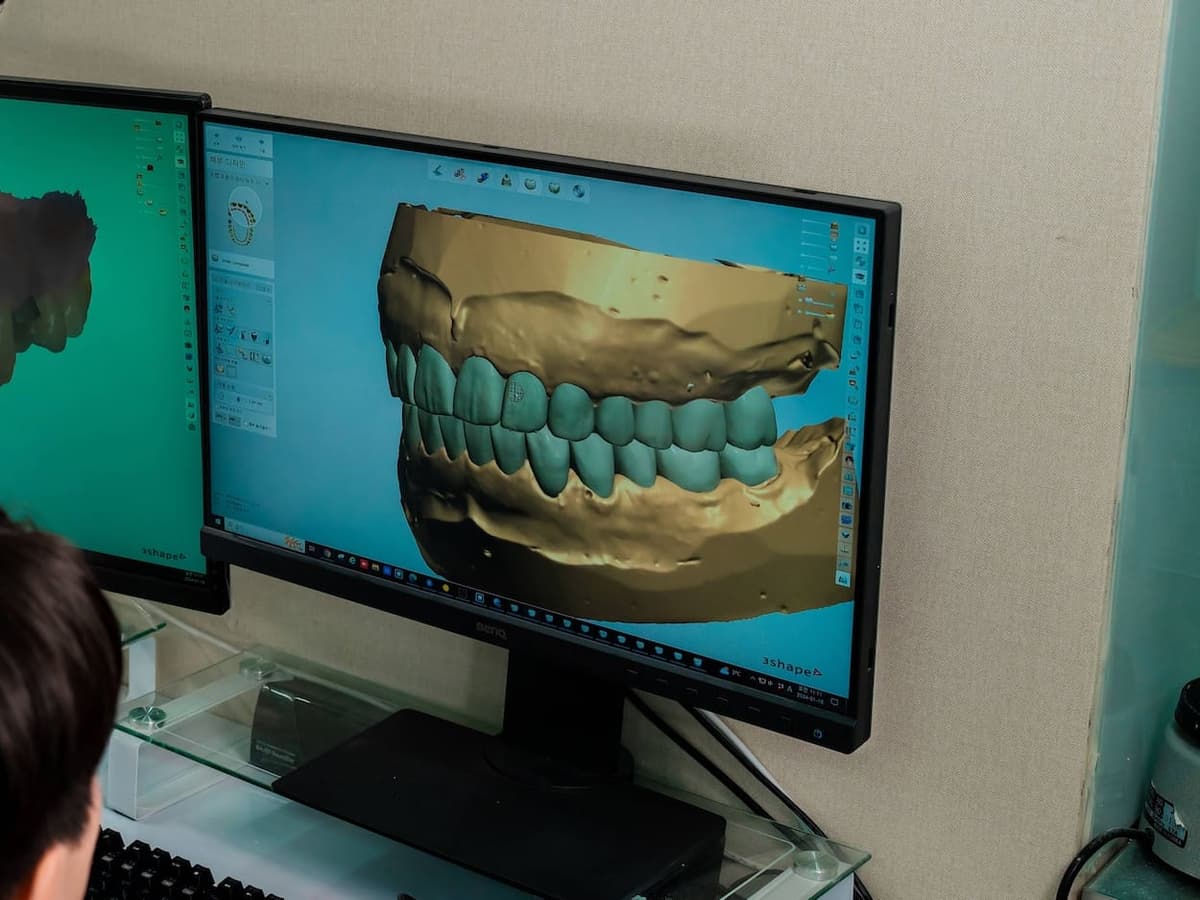 02 · TRIOS 3 · 4
Data from the TRIOS 3D intraoral scanner is used for computer-simulated surgery, so we can confirm the implant position that suits your mouth — and preview the result — before surgery.
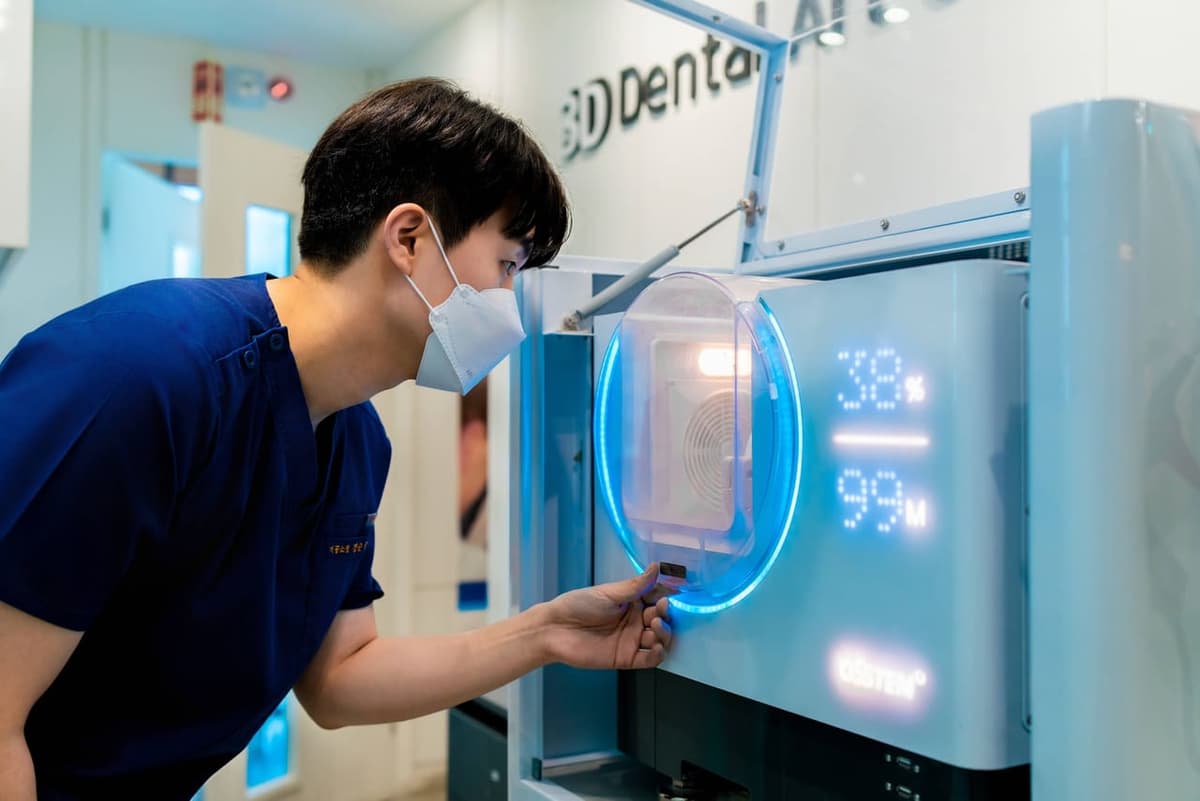 03 · IN-HOUSE LAB
With a lab inside the clinic, dentists and technicians talk directly. We make restorations that are both natural-looking and functional, and any change is applied right away.
CASES
Grouped by the extent of treatment.
All-on-4 and All-on-6 cases, and full upper and lower implant cases.
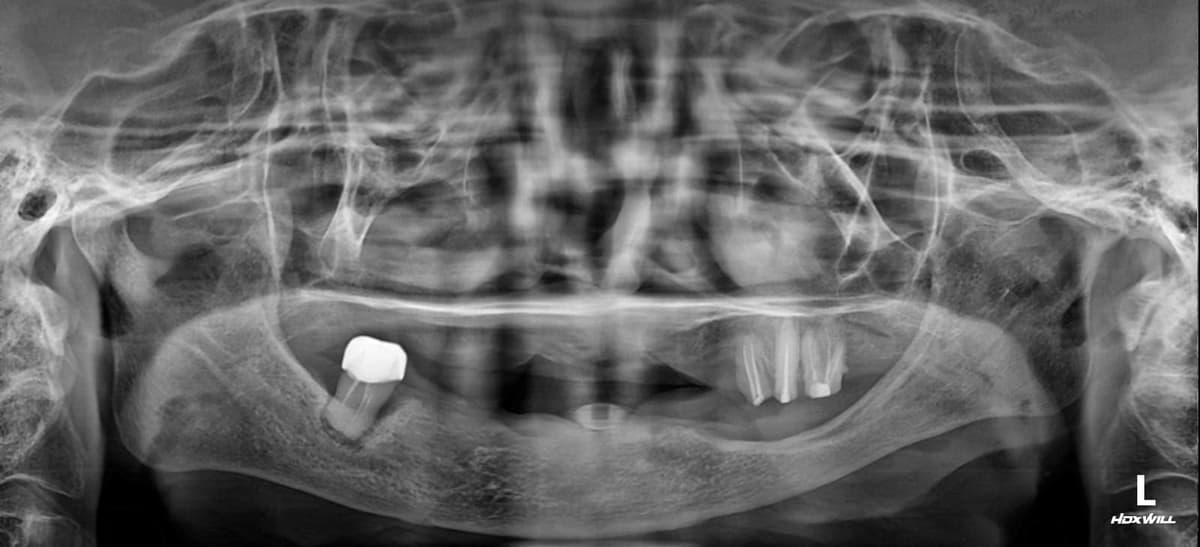
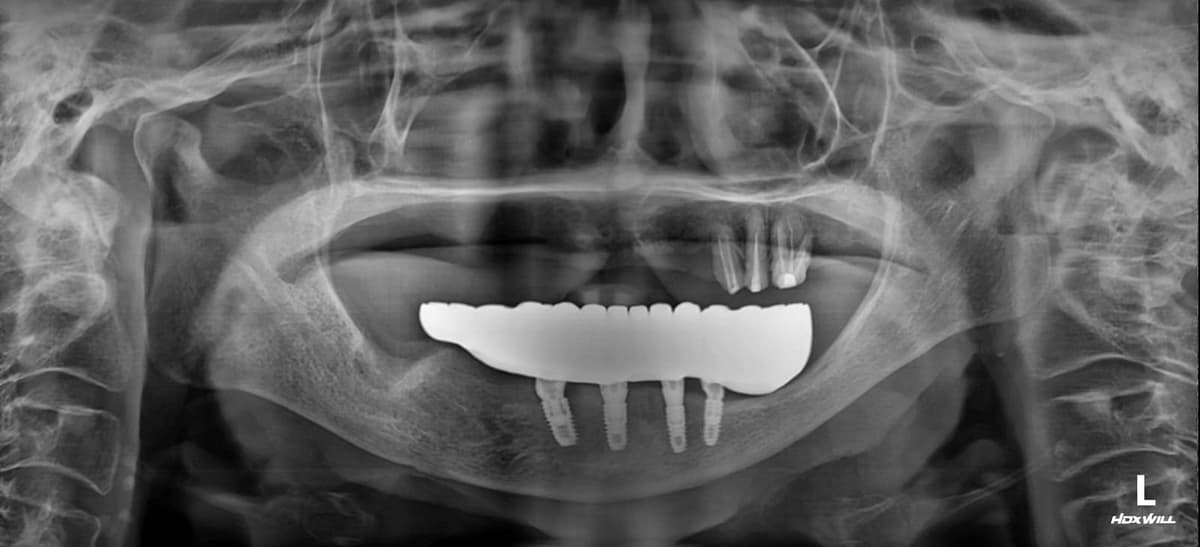
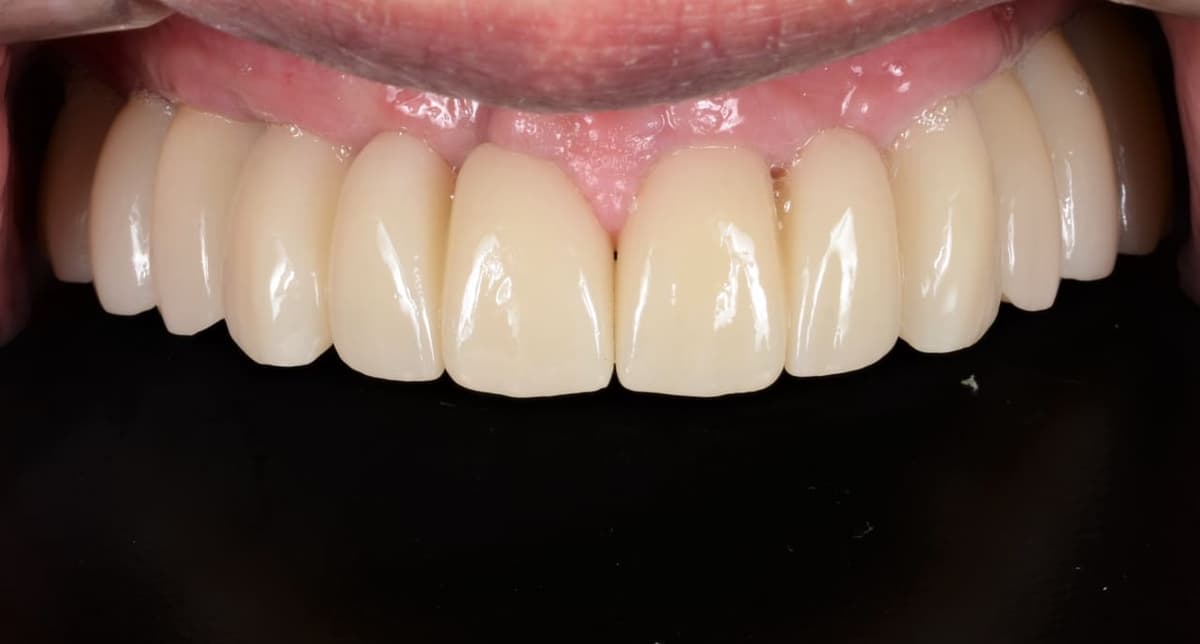
The remaining lower teeth were removed and the whole lower arch was restored with a fixed bridge on four implants.
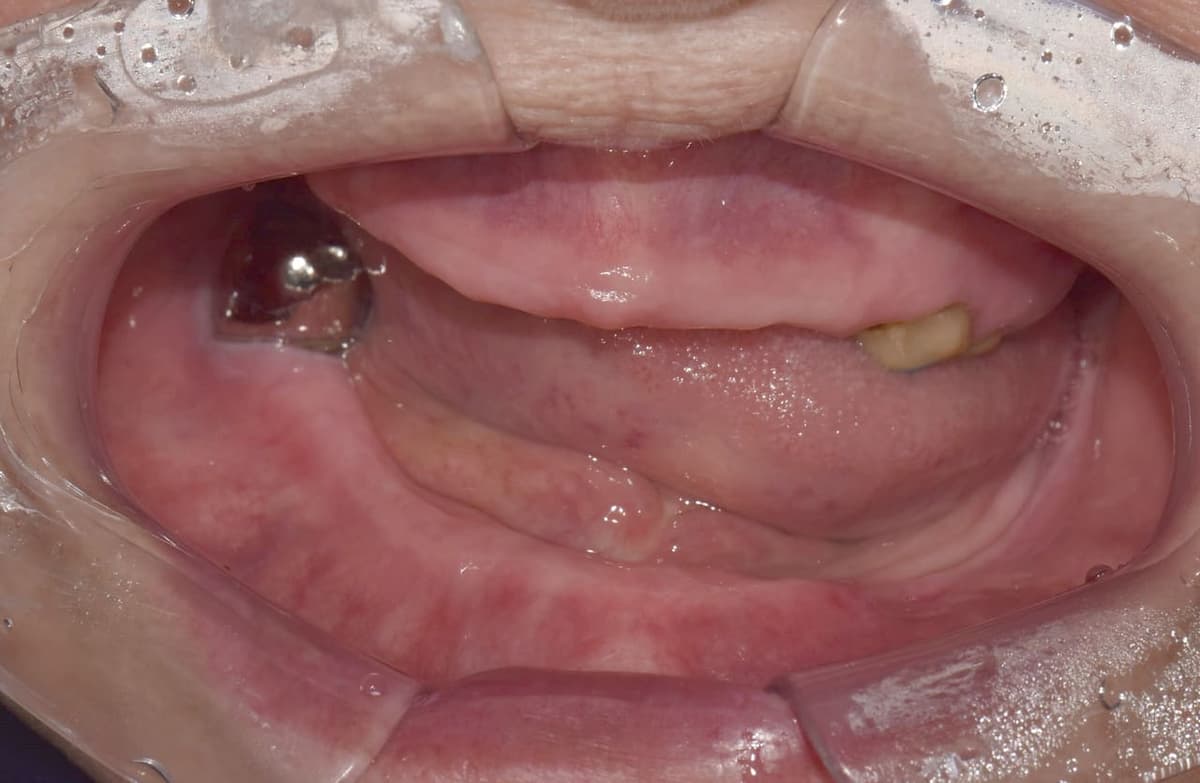
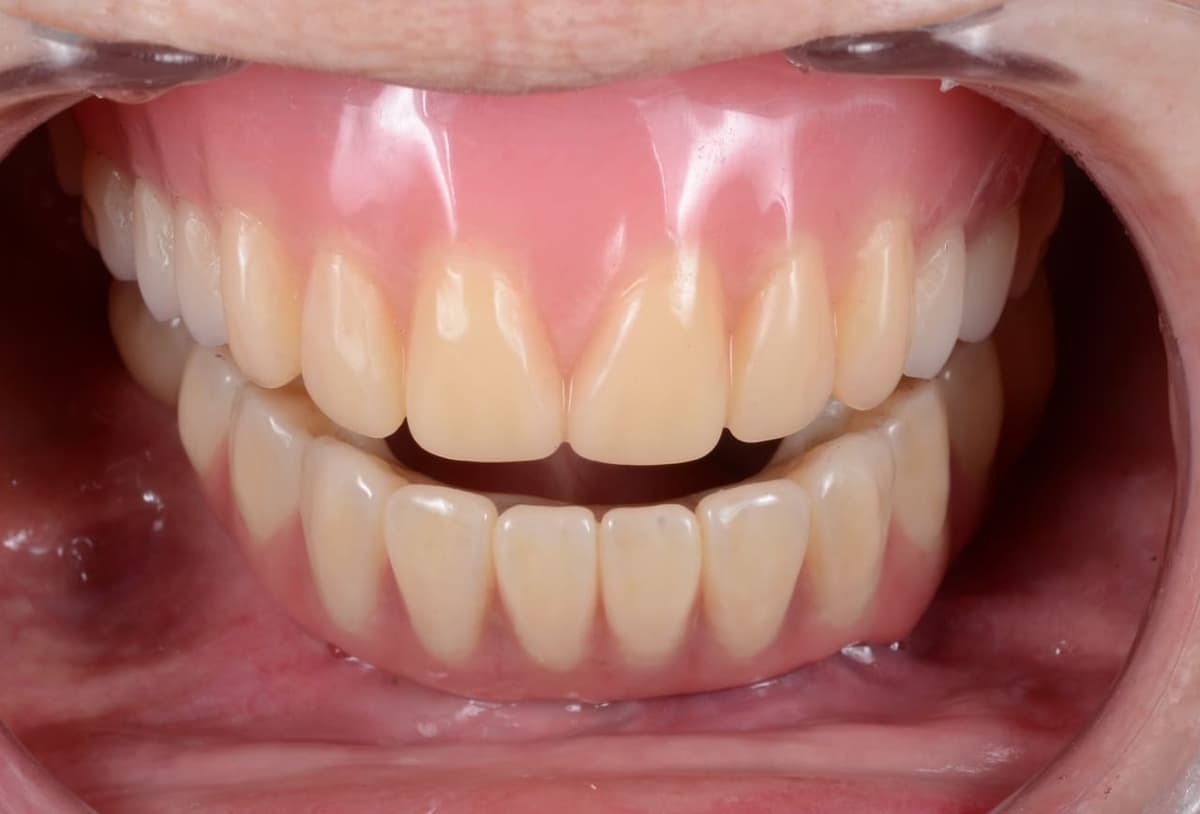
Intraoral views of the same case before and after treatment.
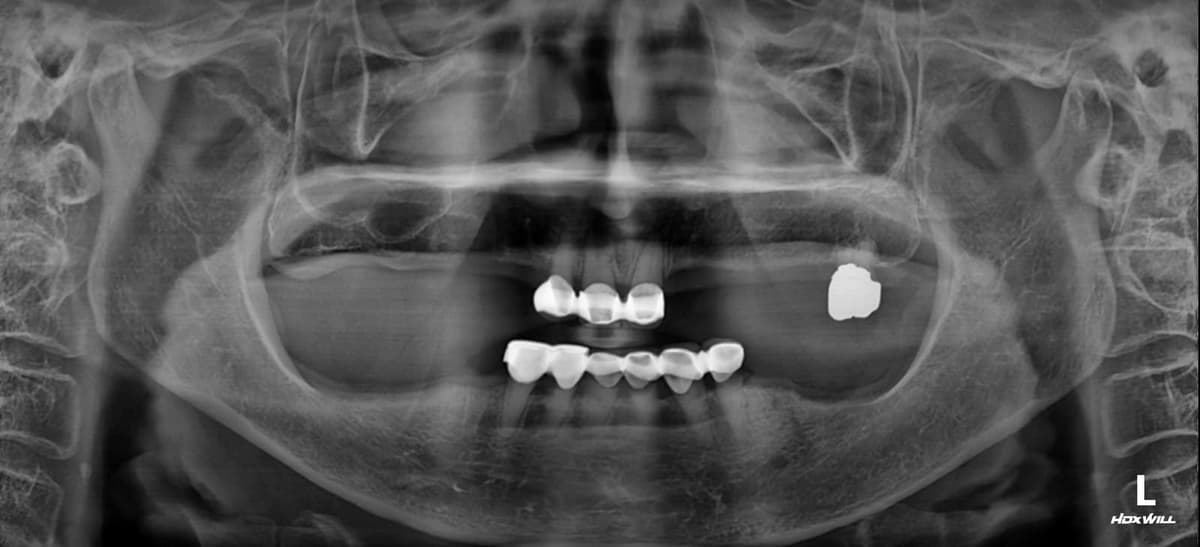
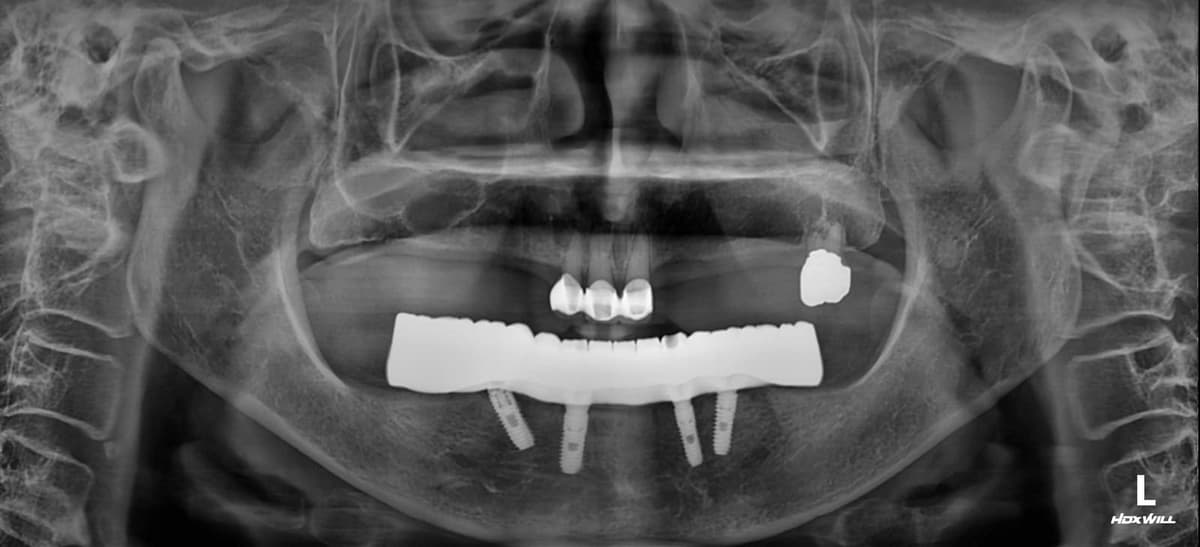
A lower jaw that relied on a bridge was converted to a fixed bridge supported by four implants.
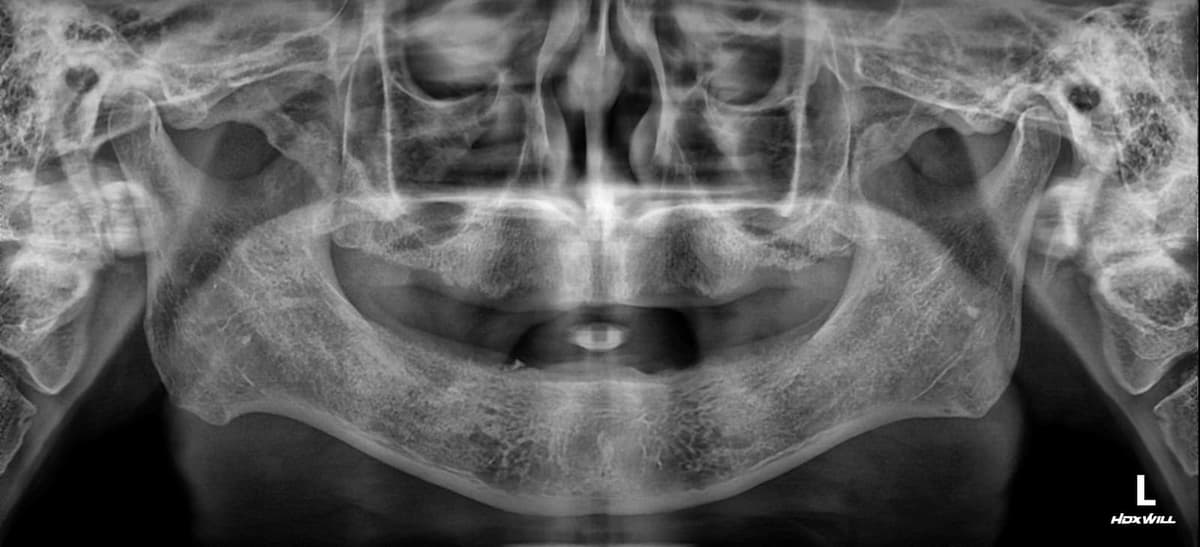
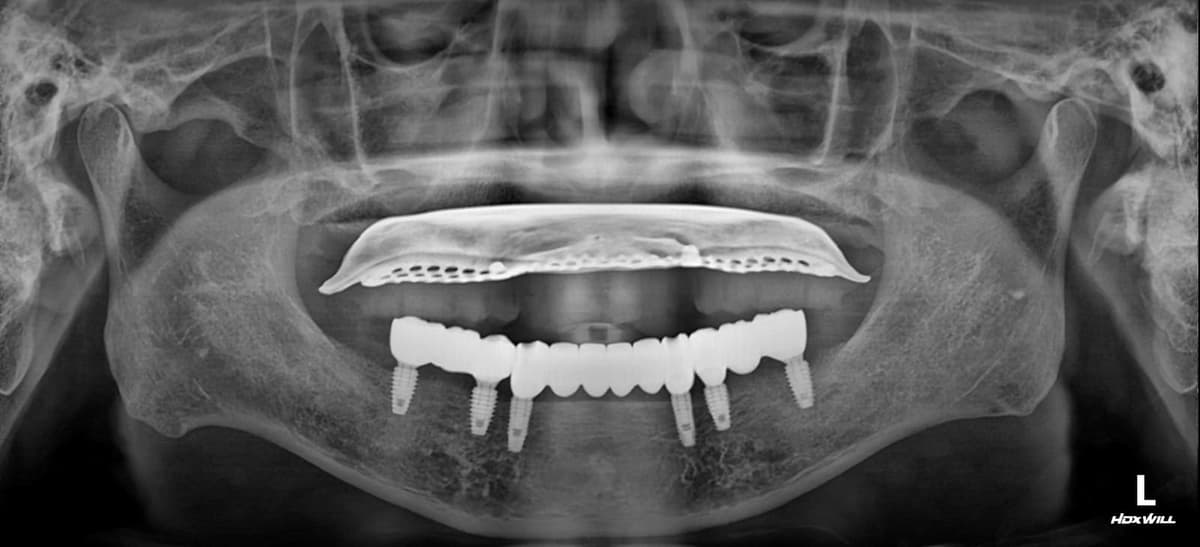
Six implants were placed in a toothless lower jaw to spread the chewing load widely.
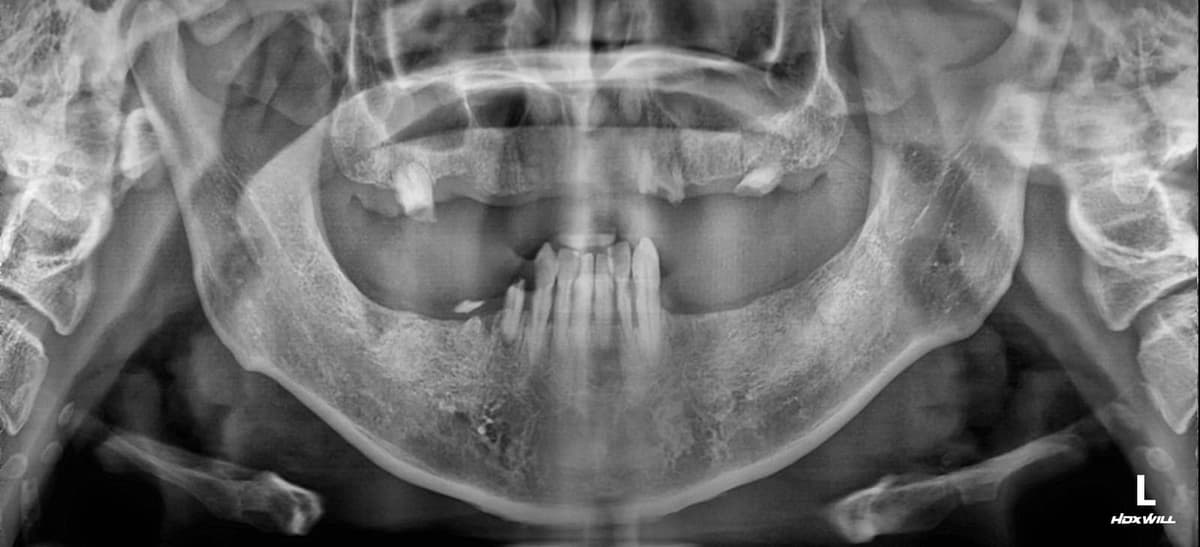
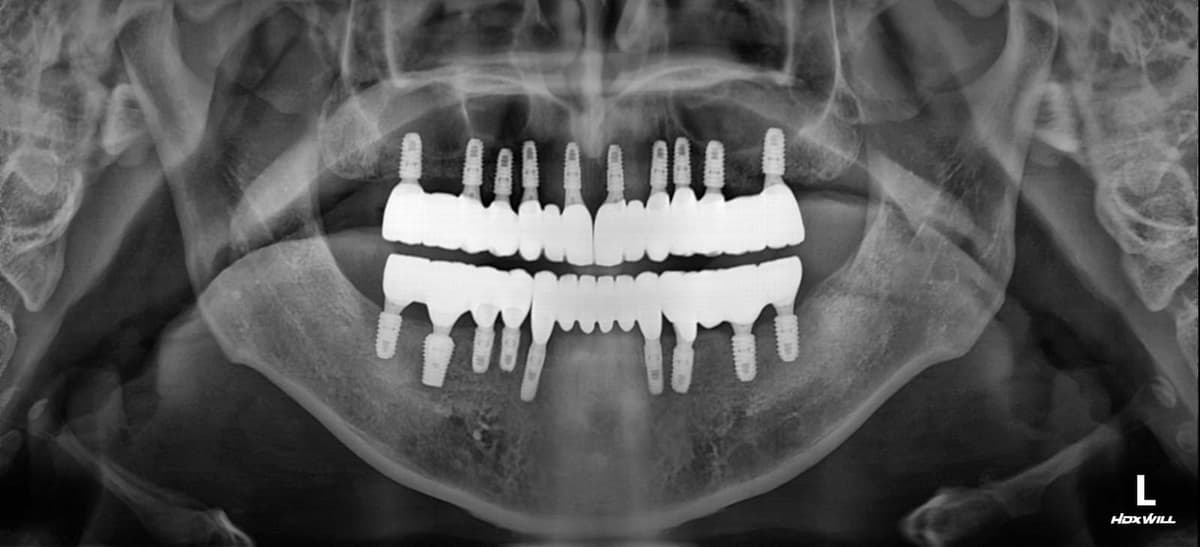
Upper and lower jaws that had lost most of their teeth were restored with fixed implant bridges.
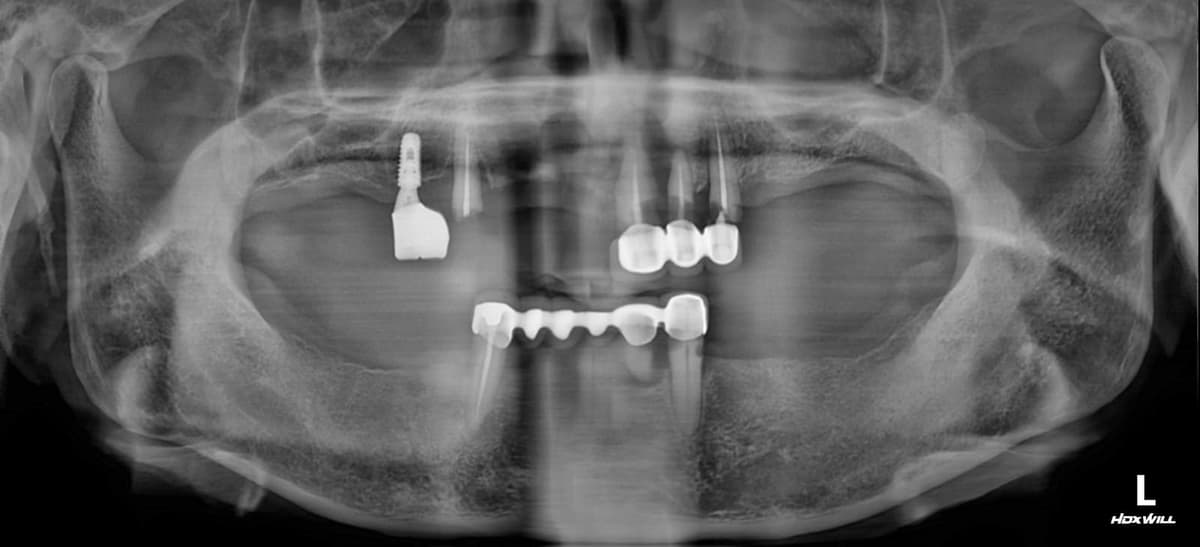
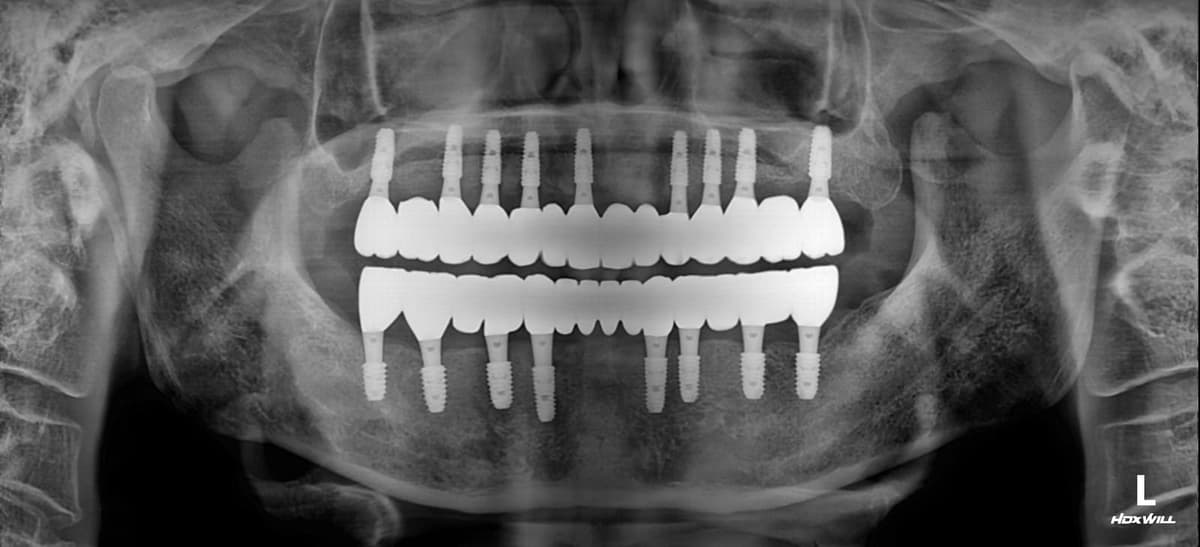
Remaining teeth and old restorations were removed and both jaws were redesigned with implants.
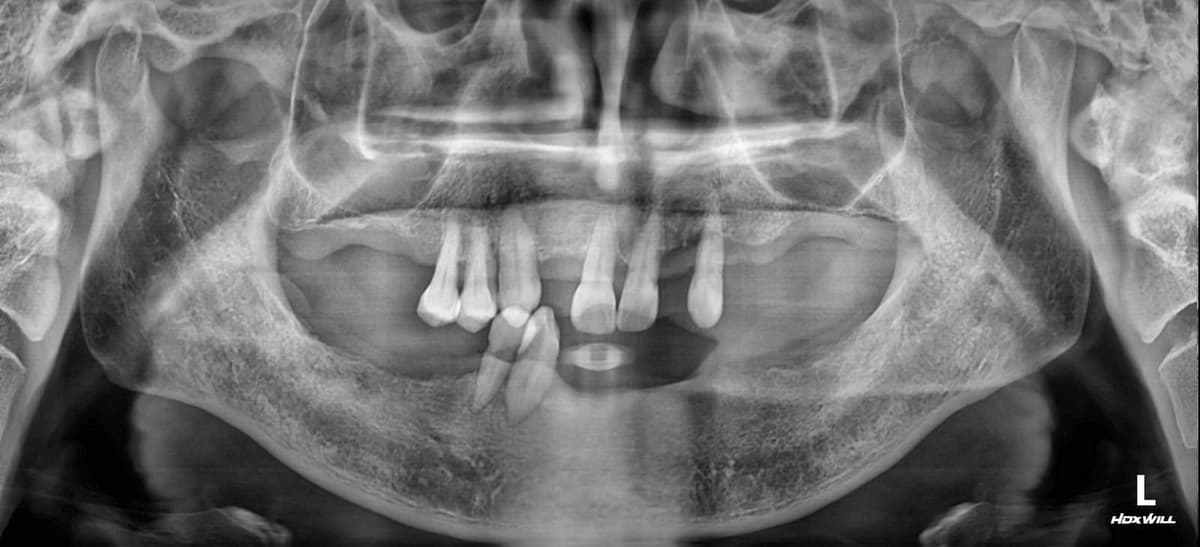
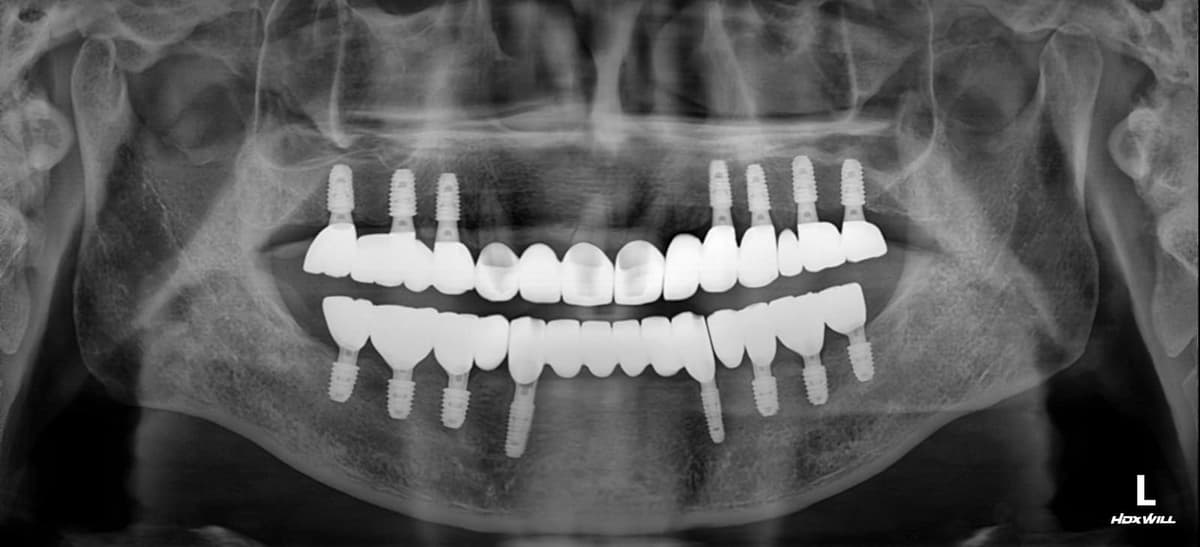
Remaining teeth were removed and both jaws were restored with fixed implant bridges.
These are before/after photos of the same patient, same teeth, treated by the same medical staff, posted with the patient's consent. Results vary by individual; all treatments may involve side effects such as infection or bleeding — please consult the medical staff.
SEDATION IMPLANT
Our oral & maxillofacial surgeon performs treatment under conscious sedation, with a 3-way safety protocol that continuously monitors oxygen saturation, pulse and ECG. Even long procedures such as full-arch implants can be received comfortably.
SURGEON
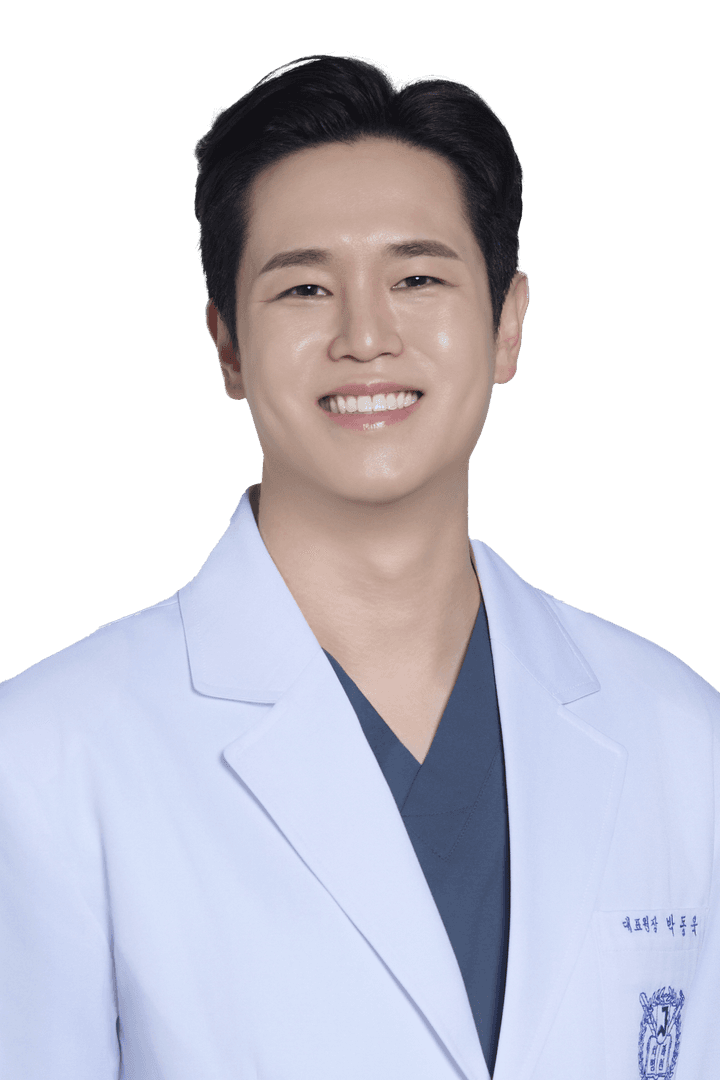
DIRECTOR · ADJUNCT PROFESSOR
Oral & Maxillofacial Surgery Specialist · Integrated Dentistry Specialist
“The depth of a Seoul National University–trained specialist, with the warmth of caring for family.”
FAQ
We answer every last question, carefully and in full.
Yes. When bone is insufficient, we can build it up with bone grafting or a sinus lift before placing implants, or use the All-on-4 approach, which places the minimum number of implants in areas where the bone is good. Our oral & maxillofacial surgeon checks your bone with 3D CT and proposes the safest option.
LOCATION
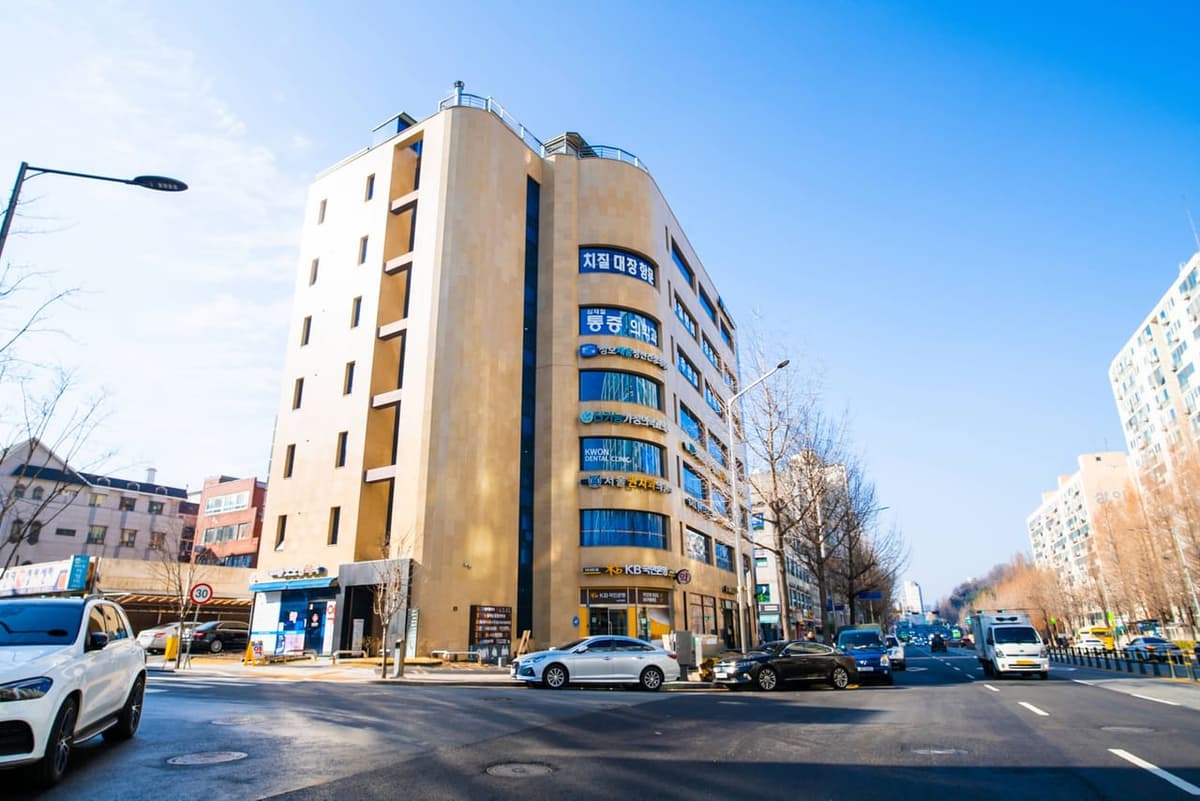
Open on public holidays, too
| Mon · Thu (late hours) | 09:30 – 21:00 |
|---|---|
| Tue · Wed · Fri | 09:30 – 18:30 |
| Sat · Public holidays | 09:30 – 14:00 |
| Lunch break (weekdays) | 13:00 – 14:00 |
| Sunday | Closed |
Open until 9 p.m. on Mondays and Thursdays, and until 2 p.m. on Saturdays and public holidays. Closed on Sundays.
KEEP WHAT'S ORIGINAL & NATURAL
Just leave your symptoms and contact details —
the dentist in charge will review them and get back to you.