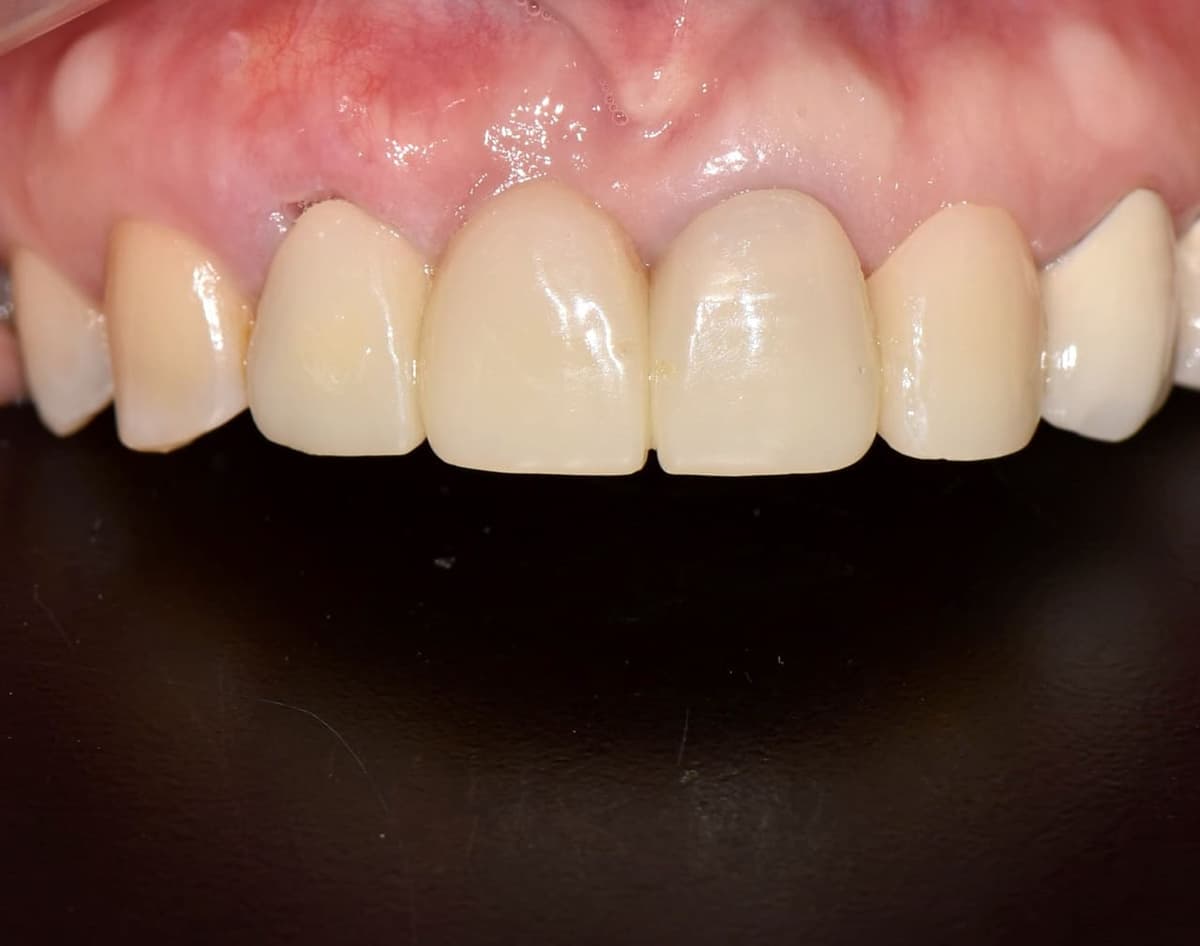
Healthy gum around the upper front teeth after a gum graft

GUM GRAFT

Restoring receded gums
with a gum graft

When gums recede and expose the root, teeth feel sensitive, look longer and become prone to root decay. Grafting the missing gum covers the root and thickens the gum.

Surgeon · Dr. Park Dong-Uk (Director, Oral & Maxillofacial Surgery Specialist)

Connective tissue graft

CTG

Free gingival graft

FGG

Around implants

Soft tissue

GUM RECESSION

Why do gums
recede?

Once gums recede, they do not grow back on their own. We correct the cause first, and when needed, restore the gum with a graft.

Signs to watch for

  • —The root area of a tooth stings with cold water or air
  • —Teeth look longer than they used to
  • —The neck of a tooth looks notched or yellowish
  • —A metallic color shows through around an implant

Main causes of gum recession

  1. 01

    Hard, side-to-side brushing

    Years of rough brushing gradually push thin gums down.

  2. 02

    Gum (periodontal) disease

    When inflammation shrinks the bone beneath, the gum recedes with it.

  3. 03

    Naturally thin gums

    People with thin gums and bone develop recession more easily, even with minor irritation.

  4. 04

    Tooth position and orthodontic movement

    When a tooth sits toward the outer edge of the bone, the gum there becomes thin.

  5. 05

    Grinding and clenching

    Force concentrated at the neck of the tooth can damage both gum and tooth.

TREATMENT

The right graft
for your gums

We choose the tissue and technique based on how far the gum has receded, how thick it is and where it is.

CTG

Connective Tissue Graft

Connective tissue graft

A thin layer of connective tissue is taken from inside the palate and placed beneath the gum. It blends naturally with the surrounding gum with little color difference, so it is mainly used to cover exposed roots.

Used for · Exposed roots · thin gums · front teeth

FGG

Free Gingival Graft

Free gingival graft

Firm (keratinized) gum from the surface of the palate is transferred. Used when there is too little firm gum around a tooth or implant, so brushing hurts or inflammation keeps returning.

Used for · Lack of keratinized gum · around implants

RC

Root Coverage

Root coverage

The general term for surgery that covers an exposed root with gum again. A flap that moves the surrounding gum up is often combined with a connective tissue graft.

Used for · Sensitive roots · teeth that look long

AROUND IMPLANT

Gum thickness matters
around implants too

When the gum around an implant is thin or lacks firm tissue, metal can show through and brushing becomes uncomfortable, making inflammation more likely. Grafting soft tissue before or after placement thickens the gum and makes long-term care easier.

01

Less metal show-through

Thicker gum hides the grey tint of an implant that can show through thin gum.

02

Comfortable brushing

A band of firm gum means brushing no longer hurts, making care easier.

03

Preventing peri-implantitis

Strong surrounding gum leaves fewer gaps for bacteria, lowering the risk of inflammation.

04

The gum line of front teeth

A front-tooth implant that shows when you smile looks natural only when gum height and volume match too.

It can be planned together with implant surgery, or done separately if your gums are uncomfortable after implant treatment elsewhere or here.

About our implant treatment

PROCESS

The gum graft process

  1. 01

    STEP 01

    Diagnosis

    We check how far the gum has receded, its thickness and the bone beneath — and look for causes such as brushing habits or grinding.

  2. 02

    STEP 02

    Surgical plan

    We decide the tissue to graft, the extent and the donor site, and explain the recovery in advance.

  3. 03

    STEP 03

    Gum graft surgery

    Performed under local anesthesia in about an hour. If you are very anxious, it can be done under conscious sedation.

  4. 04

    STEP 04

    Stitch removal

    After 1–2 weeks, the stitches are removed and we check that the graft has taken well.

  5. 05

    STEP 05

    Settling period

    It takes a few months for the grafted gum to become firmly established. We check regularly and guide you on proper brushing.

RECOVERY

Recovery and precautions

For about 1–2 weeks after surgery, you may feel some discomfort at the surgical site and at the donor site on the palate. Most people recover without difficulty by taking the prescribed medication and following our care instructions.

  • —Keep the toothbrush off the surgical site for as long as we advise
  • —Avoid pulling your lip to look at the surgical site
  • —Avoid spicy, hot or hard foods, and chew on the other side
  • —Do not smoke — it reduces blood flow to the grafted gum

SURGEON

Gum grafts are performed
by our director himself

Dr. Park Dong-Uk, Director

DIRECTOR · ADJUNCT PROFESSOR

Dr. Park Dong-Uk

Oral & Maxillofacial Surgery Specialist · Integrated Dentistry Specialist

“The depth of a Seoul National University–trained specialist, with the warmth of caring for family.”

  • —Board-certified Oral & Maxillofacial Surgery Specialist (Ministry of Health and Welfare)
  • —Board-certified Integrated Dentistry Specialist (Ministry of Health and Welfare)
  • —PhD in Oral & Maxillofacial Surgery, Seoul National University School of Dentistry
  • —First author, implant-related paper in an international SCI journal (Journal of Dental Sciences, 2022)
  • —Intern, Regional Trauma Center, Gachon University Gil Medical Center
  • —Resident, Oral & Maxillofacial Surgery, SNU Boramae Medical Center
  • —Adjunct Professor, Oral & Maxillofacial Surgery, SNU Boramae Medical Center
Implants & full-arch implantsWisdom tooth extractionGummy smileGum graftingTMJ & jaw BotoxOral cancer screeningSedation
Meet the whole team

FAQ

Gum graft FAQ

We answer every last question, carefully and in full.

When receding gums expose the root so that teeth feel sensitive or look long, or when thin gums around an implant keep getting inflamed, we reinforce the gums with a connective tissue graft (CTG) or root coverage surgery.

LOCATION

2 minutes on foot
from Gaerong Station, Exit 3

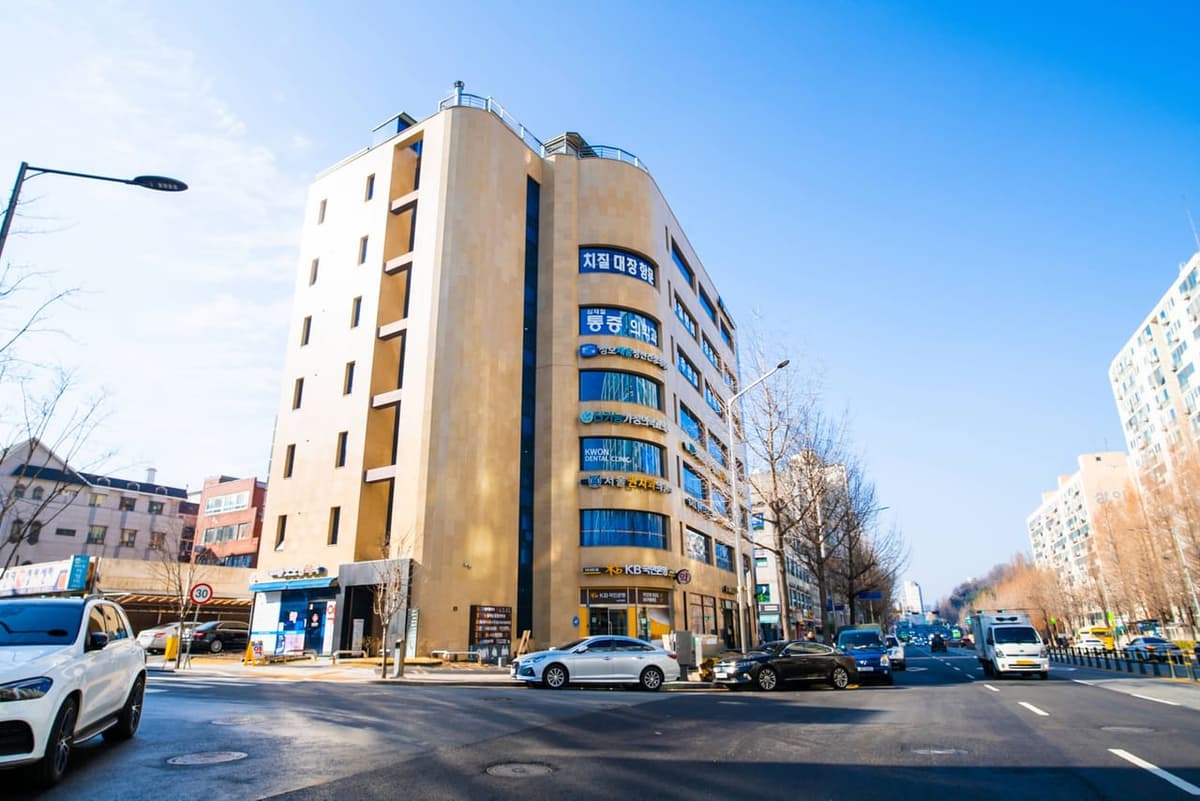
Seoul Kwon Dental Clinic building exterior
ADDRESS
3F, 174-14 Garak-dong, Songpa-gu, Seoul, Korea
2-minute walk from Exit 3 of Gaerong Station (Line 5) · 3rd floor of the KB Kookmin Bank / Starbucks building
PHONE
+82-2-6952-2788 (in Korea: 02-6952-2788)
PARKING
Parking is available in the building — please ask at the front desk when you arrive.
HOURS

Open on public holidays, too

Mon · Thu (late hours)09:30 – 21:00
Tue · Wed · Fri09:30 – 18:30
Sat · Public holidays09:30 – 14:00
Lunch break (weekdays)13:00 – 14:00
SundayClosed

Open until 9 p.m. on Mondays and Thursdays, and until 2 p.m. on Saturdays and public holidays. Closed on Sundays.

KEEP WHAT'S ORIGINAL & NATURAL

Through your teeth,
we see your life

Just leave your symptoms and contact details —
the dentist in charge will review them and get back to you.